
Pomelos from My Garden
My First Pomelo Harvest
Two months after moving to Kochi, I came home to find something I wasn’t quite prepared for: four full cardboard boxes of pomelos, freshly picked from the tree in my own garden.
I’m Matsumura Aki, a software engineer on the operational efficiency team at Hirose Paper. I grew up outside Kochi Prefecture, and this is my first time actually living here. I knew Kochi was known for its nature and produce — but experiencing it firsthand is something else entirely.
Growing up, I’d visit relatives in Kochi during school breaks. I remember picking fruit in their yard, running around with cousins. Back then it was just a childhood memory. Now, standing in my own garden with an absurd amount of pomelos at my feet, those memories came rushing back. Seasonal fruit just… appears, if you have the right tree. It still surprises me.
What Is a Pomelo?
Pomelo — known in Japanese as buntan or zabon — is a citrus fruit with a long history. The variety grown in Kochi Prefecture is called “Tosa Buntan,” and it carries a kind of botanical prestige: pomelos are the ancestor of many modern citrus fruits, including grapefruit, natsumikan (a Japanese summer orange), and hassaku.
Think of it as the root of the citrus family tree. All those varieties we know today trace back, in part, to this fruit.
Enjoying the Harvest
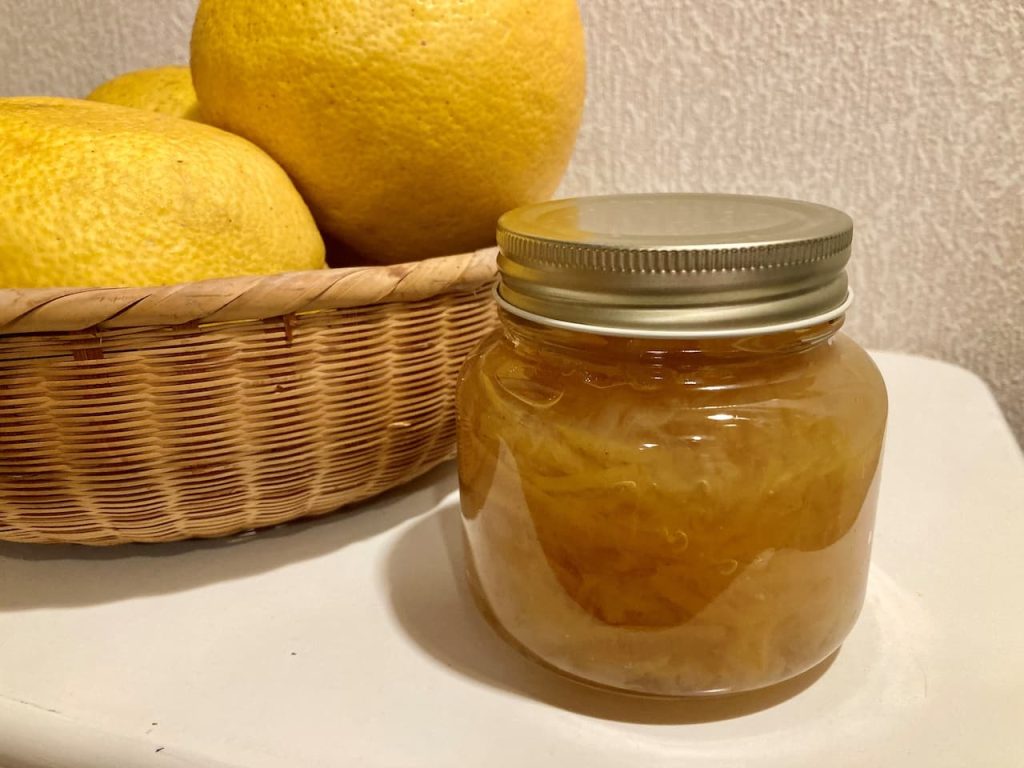
The taste is hard to describe without eating one fresh. The balance between sweetness and bright acidity is just right — nothing like what you’d get from a store. My wife turned the surplus into homemade jam, which we’ve been spreading on toast and stirring into yogurt. The aroma alone is worth it.
We also sent some boxes to friends living outside Kochi. The response was enthusiastic. It’s a small thing, but sharing something you grew yourself — even accidentally — feels genuinely good.
There’s a kind of quiet abundance to life here that I hadn’t expected. The tree did its thing. The fruit appeared. We ate well, made jam, sent gifts. I’m starting to think this is what living with the seasons actually means.