
I Made Paper from River Branches
Why I Tried This
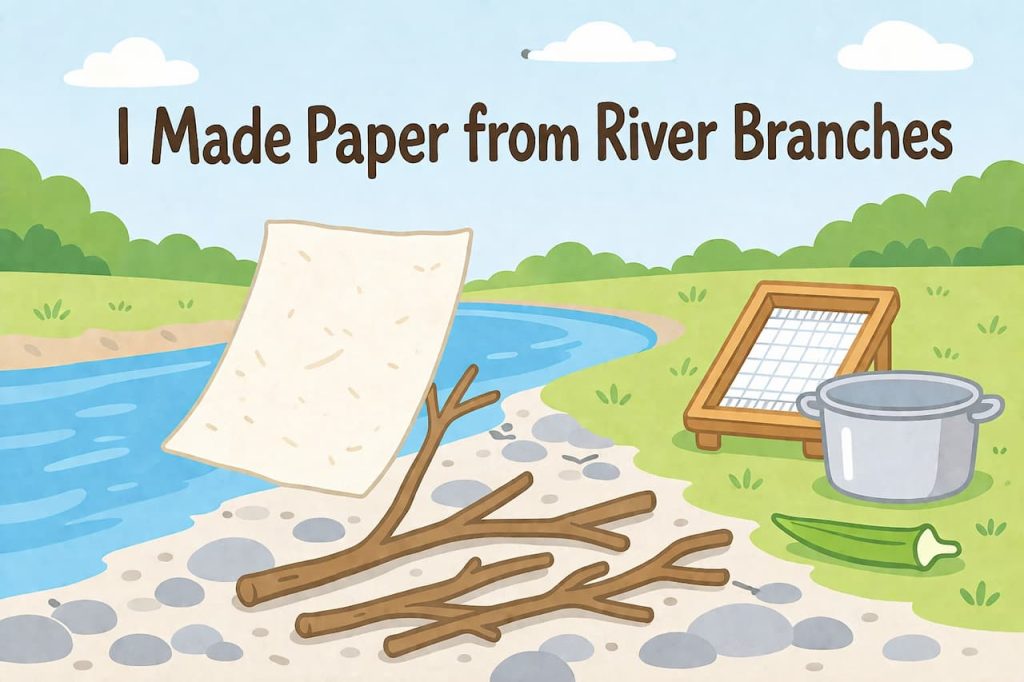
Before I joined Hirose Paper Manufacturing, I did something a little unusual: I tried to make paper from scratch, using branches I picked up from a riverbank.
Two reasons pushed me into it. First, genuine curiosity — I wanted to understand what paper actually is, not just read about it. Hands-on experience seemed like the fastest path to real knowledge. Second, I’ll admit, I thought it would make a strong impression in my job interviews. (More on how that went at the end.)
Gathering Branches and Scraping the Bark
I collected branches along the Yamashina River in Kyoto. Turns out riverbanks are surprisingly good places to find raw materials — I had more options than I expected.
After collecting the branches, I had to remove the bark using a craft knife. This turned out to be the hardest part of the entire process.
Older, weathered branches were forgiving — the bark practically fell off with a light scrape. Young branches, though, were a different story. They were surprisingly tough, and no matter how hard I worked the knife, the bark refused to budge easily. By the end, the skin on my hands had peeled off too.
Bleaching and Boiling
I cut the peeled branches into small pieces, packed them into a jar, and soaked them in household bleach for about a week. The bleach softens the fibers and lightens the color — or so I hoped.
After soaking, I boiled the pieces to soften them further.
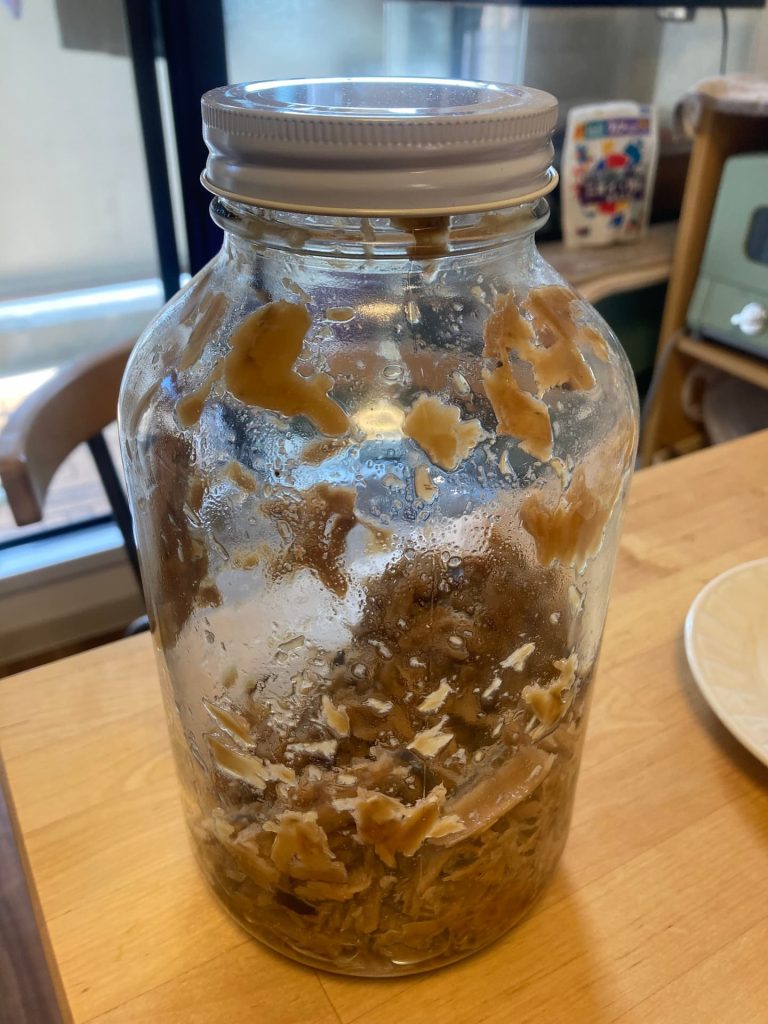
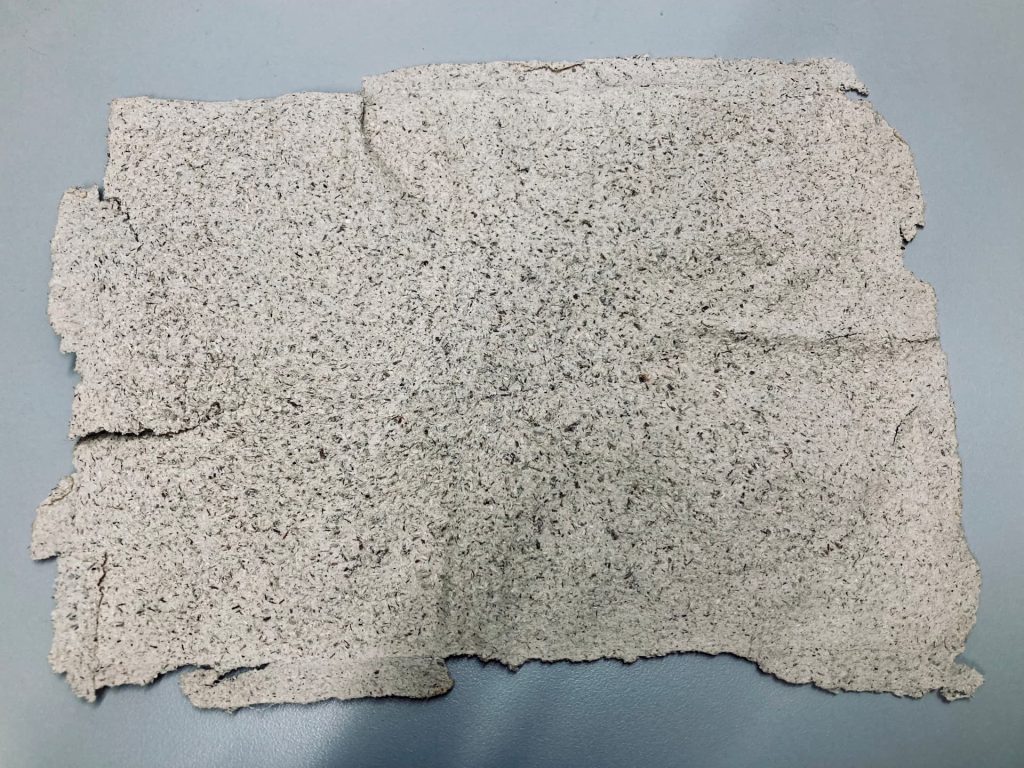
The color didn’t lighten as much as I expected. The fibers stayed a warm, earthy brown — like water you’ve simmered burdock root in. The finished paper ended up brown too. Honestly? It gave the paper a kind of charm. I grew to like it.
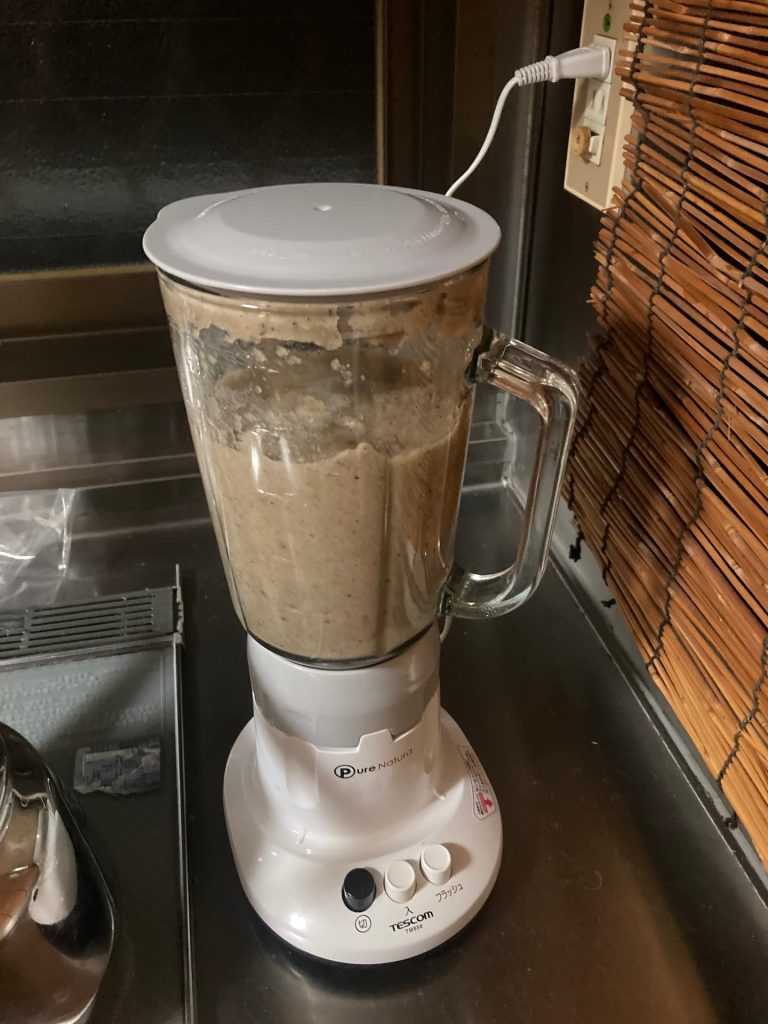
Once soft enough, I ran the fibers through a home blender to break them down further.
Preparing for Papermaking
Traditional papermaking requires a suketa — a flat mesh frame used to scoop and drain the fiber slurry. I built mine from a 100-yen wooden photo frame and a piece of lace curtain as the mesh. Simple, but it worked.
I also needed neri, a viscous liquid that helps the fibers distribute evenly during the forming process. It’s traditionally made from tororo-aoi (a plant in the mallow family), but I discovered that okra works as a substitute. I soaked okra in water until it turned slippery and used that instead.
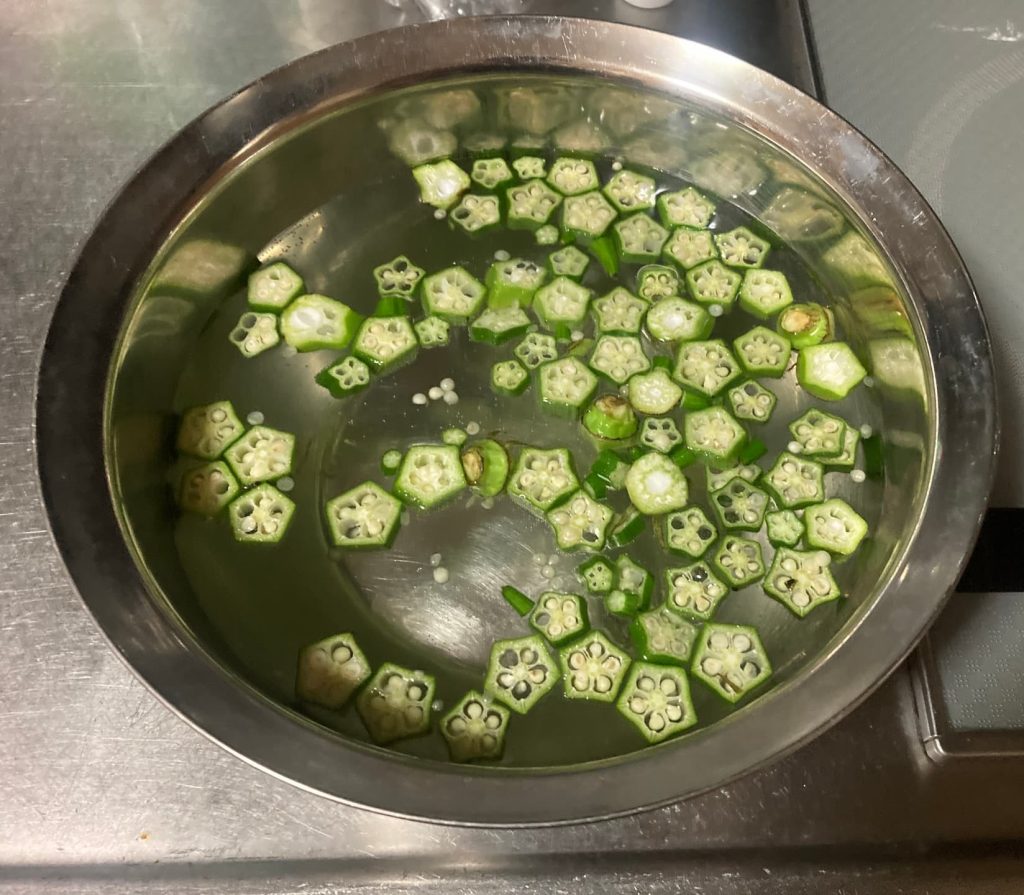
For learning the fundamentals, improvised tools are perfectly fine. I wouldn’t recommend them for serious production — but for understanding how papermaking works, they do the job.
Time to Make Paper!
The actual papermaking was a lot of trial and error.
Getting the fiber distribution even was harder than I thought. Scooping with the right amount of force — enough to spread the fibers, not so much that they clumped — took several attempts to get a feel for.
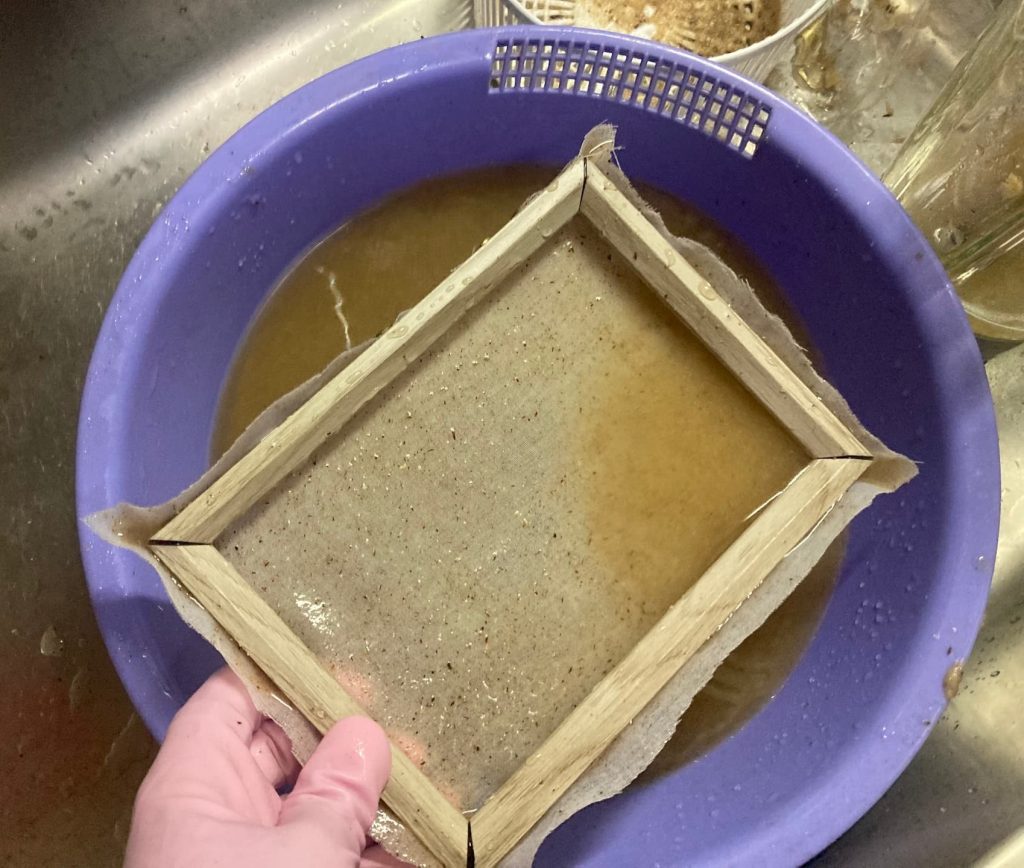
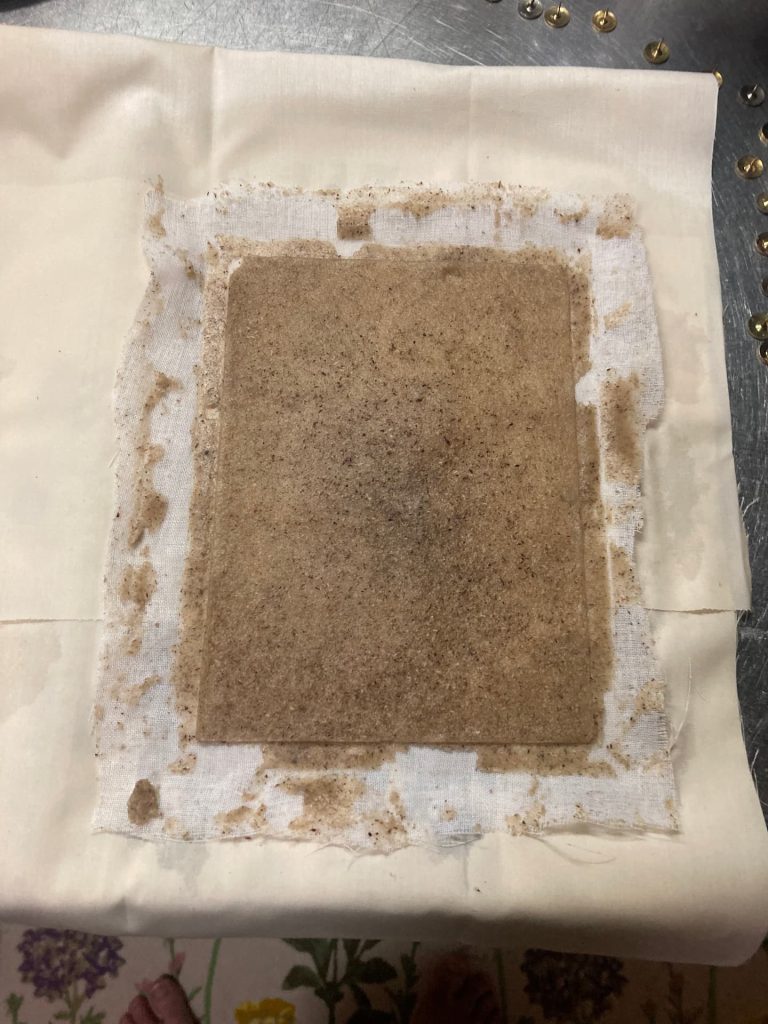
Transferring the newly formed sheet from the mesh frame to cloth was equally delicate. Too heavy a hand and the whole fragile sheet would break apart.
After forming, I pressed each sheet between newspaper layers and weighted it down with a heavy book to squeeze out the moisture. Then I let it dry for a few days.
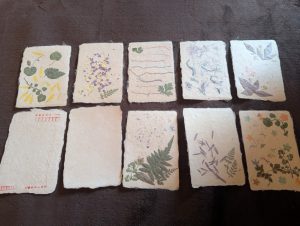
The finished paper was honestly a bit rough — slightly crumbly, brownish, and not something you’d write a letter on. But I had made it with my own hands, from branches I picked up off the ground. That felt genuinely good.
Closing Thoughts
After I joined Hirose Paper Manufacturing and walked through the factory floor, something clicked. The industrial papermaking process suddenly made sense in a way it never had before.
The machines are enormous. The scale is completely different. But the core logic is the same: dissolve fibers in water, spread them into a sheet, drain the water, dry. The same sequence I stumbled through in my kitchen.
There’s a Japanese saying: hyakubun wa ikken ni shikazu — “hearing something a hundred times is not as good as seeing it once.” I’d go further: doing it once is better still.
If you’re curious about how paper is made, I’d encourage you to try it. You don’t need special equipment. A photo frame, some okra, and a handful of branches from a riverbank will get you started.
Oh — and that strategic plan to impress my interviewers with this story? I completely forgot to bring it up during my final interview. Half a year later, it finally gets its moment here. Better late than never, I suppose.